
Manual vs. Paddle Shifters: A Comprehensive Comparison (Updated 02/13/2026)
As automatic transmissions gain popularity for ease in traffic, the debate continues: which offers a superior driving experience – traditional manuals or modern paddle shifters?
For decades, the manual transmission reigned supreme, offering drivers complete control over the vehicle’s power delivery. However, the automotive world is undergoing a significant shift. Automatic transmissions, prized for their convenience, are increasingly dominant, particularly in regions with congested traffic. This rise in automatics doesn’t diminish the enduring appeal of a driver-connected experience, though.
Many enthusiasts still crave the tactile engagement and sense of control that only a manual gearbox can provide. Enter paddle shifters – a technology aiming to bridge the gap. These systems offer a degree of manual control within an automatic transmission, promising the best of both worlds. This comparison delves into the nuances of each system, exploring their mechanics, advantages, and disadvantages, ultimately assessing where each stands in today’s evolving automotive landscape.
The Appeal of Driver Engagement
Beyond mere transportation, driving can be a deeply engaging experience. For many, this engagement is intrinsically linked to the act of shifting gears. A manual transmission demands active participation, requiring the driver to anticipate road conditions, select the appropriate gear, and execute smooth shifts. This constant interaction fosters a strong connection between driver and machine, enhancing the sense of control and involvement.
Even with the convenience of automatics, some drivers miss this “thrill of shifting gears.” Paddle shifters attempt to recapture this feeling, offering a more direct and responsive experience than a traditional automatic. However, the question remains: can electronically controlled shifts truly replicate the nuanced feedback and satisfying mechanical feel of a well-executed manual shift?

Understanding Manual Transmissions
Manual transmissions rely on a driver-operated clutch and a precise gear selection process, offering direct mechanical linkage for ultimate control and feel.
The Mechanics of a Manual Gearbox
A manual gearbox operates through a fascinating interplay of gears, shafts, and a clutch. The engine’s power initially flows to the clutch, which, when engaged, connects the engine to the transmission. This connection allows power to transfer to the input shaft.
Within the gearbox, various gear sets with different ratios are available. The driver selects a gear using the shift lever, physically moving forks to engage the desired gear pair. This alters the torque and speed delivered to the output shaft, ultimately driving the wheels.
Synchronizers play a crucial role, matching the speeds of the gears before engagement to ensure smooth, quiet shifts. Disengaging the clutch momentarily interrupts power flow, allowing for gear changes without damaging the transmission components. This mechanical process provides a direct connection between driver input and vehicle response;
The Traditional H-Pattern Shifter
The iconic H-pattern shifter is the defining interface of a manual transmission. Its layout visually represents the gear arrangement – first, second, third, and fourth gears forming one side of the ‘H’, with fifth and reverse completing the pattern.
The driver manipulates the shift lever through this pattern, physically selecting the desired gear. Precise movements are required to engage each gear cleanly, demanding coordination between the hand and foot (clutch operation).
This direct mechanical linkage provides tactile feedback, allowing drivers to ‘feel’ the gear engagement. Mastering the H-pattern requires practice, but it fosters a strong connection between driver and machine, offering a sense of control and involvement often absent in automated systems. It’s a cornerstone of the driving experience for many enthusiasts.
Advantages of Manual Transmissions
Manual transmissions offer several compelling benefits for driving purists. Greater Driver Control is paramount; drivers dictate precisely when gear changes occur, optimizing performance for various conditions. This control extends to engine braking, enhancing safety and responsiveness.
Enhanced Fuel Efficiency can be achieved, though increasingly marginal with modern automatics, as drivers can select the most efficient gear for the situation. Lower Initial Cost is another advantage, as manual transmission vehicles typically have a lower purchase price than their automatic counterparts.
Beyond these, manuals provide a more engaging and rewarding driving experience, fostering a deeper connection with the vehicle and the road. They offer a sense of accomplishment and skill mastery.
Greater Driver Control
The most significant advantage of a manual transmission lies in the unparalleled level of control it grants the driver. Unlike automatic systems, the driver directly chooses when to shift gears, responding instantly to changing road conditions and personal preferences. This direct engagement allows for precise engine speed management, maximizing power or fuel efficiency as needed.
This control isn’t merely about performance; it extends to engine braking, offering enhanced deceleration and stability, particularly during downhill driving or emergency situations. A skilled driver can utilize engine braking to reduce wear on the vehicle’s brakes, extending their lifespan.
Ultimately, greater driver control translates to a more connected and immersive driving experience.
Enhanced Fuel Efficiency (in some cases)
Historically, manual transmissions often demonstrated superior fuel efficiency compared to early automatic counterparts. This stemmed from the direct mechanical connection, minimizing energy loss through fluid couplings found in traditional automatics. However, modern automatic transmissions, particularly those with eight or more speeds, have largely closed this gap, and sometimes even surpass manual efficiency.
The fuel economy advantage of a manual hinges on the driver’s skill. Efficient shifting and maintaining optimal engine speeds are crucial. Poor driving habits can negate any potential savings.
While not a guaranteed benefit anymore, a manual transmission can still offer improved mileage for conscientious drivers.
Lower Initial Cost
Traditionally, vehicles equipped with manual transmissions have carried a lower price tag than their automatic counterparts. This price difference arises from the simpler mechanical design and fewer components required in a manual gearbox, translating to reduced manufacturing costs for the automaker. This cost saving is often passed on to the consumer, making manual transmission vehicles a more budget-friendly option.
However, this price gap is narrowing as manual transmissions become less common. Some manufacturers are now offering manuals only on base trim levels, or phasing them out entirely.
Despite the trend, a manual can still represent initial savings.
Disadvantages of Manual Transmissions
Despite their appeal, manual transmissions present several drawbacks in modern driving conditions. A steeper learning curve is required to master smooth clutch control and precise shifting, potentially intimidating new drivers. In demanding traffic situations, constant clutch engagement and gear changes can become physically tiring and frustrating, diminishing the driving experience.
Furthermore, there’s the potential for stall and jerky shifts, especially for inexperienced drivers, leading to uncomfortable rides. While skilled drivers can mitigate these issues, they remain inherent challenges. The need for constant driver input also means less attention can be devoted to the road.
Steeper Learning Curve
Mastering a manual transmission demands significant practice and coordination. Unlike automatic systems, drivers must simultaneously manage the clutch, gear lever, and throttle, a complex interplay requiring muscle memory and timing. This initial hurdle can be daunting for new drivers accustomed to the simplicity of automatic gear selection.
Smooth starts, seamless gear changes, and avoiding stalls necessitate dedicated learning. The coordination isn’t intuitive, and errors are common during the initial stages. This steeper learning curve can be a significant barrier to entry for many, potentially discouraging them from choosing a manual vehicle.
More Demanding in Traffic
Navigating congested city streets with a manual transmission can be physically and mentally taxing. Constant shifting between gears is required to maintain control at low speeds, demanding repetitive clutch engagement and gear lever movements. This continuous operation can lead to driver fatigue, especially during prolonged stop-and-go traffic conditions.
The need for precise coordination becomes amplified in traffic, increasing the risk of stalls or jerky movements. As automatic transmissions become more popular due to their ease of use in heavy traffic, the manual’s demands present a clear disadvantage for daily commuting. It requires significantly more driver attention.
Potential for Stall and Jerky Shifts
A significant drawback of manual transmissions lies in the potential for stalling, particularly for inexperienced drivers. Incorrect clutch and throttle coordination can abruptly halt the engine, requiring a restart and potentially causing embarrassment or safety concerns. Even seasoned drivers can encounter stalls in challenging situations.
Furthermore, improper shifting technique can result in jerky transitions between gears, diminishing ride comfort for both the driver and passengers. Smooth operation demands practice and finesse. While skilled drivers can mitigate these issues, the inherent possibility of stalls and rough shifts remains a characteristic of manual gearboxes, unlike the refined smoothness of automated systems.

Exploring Paddle Shifters
Paddle shifters, often called flappy-paddle gearboxes, provide a convenient method for drivers to manually control gear selection directly from the steering wheel.
What are Paddle Shifters?
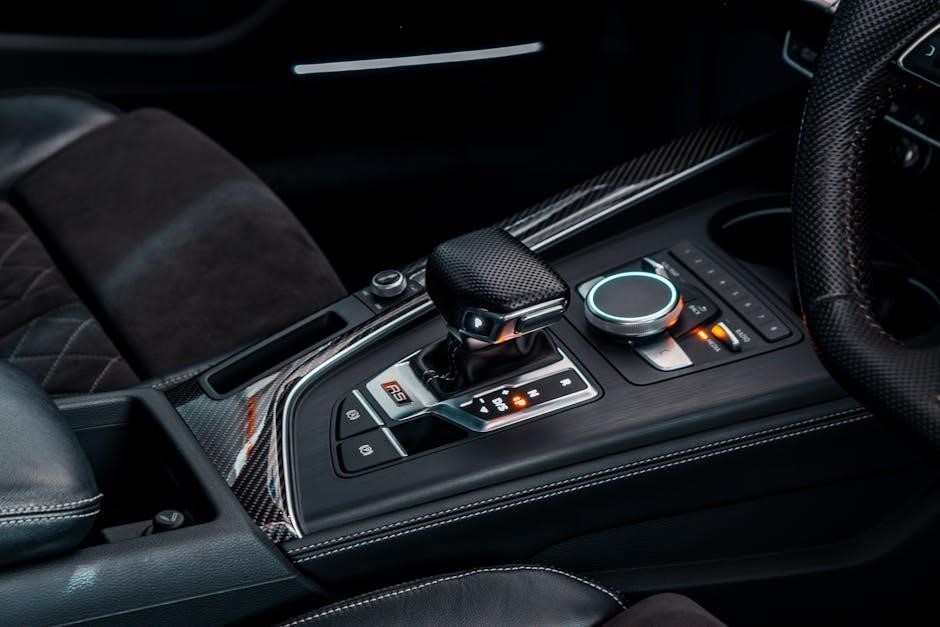
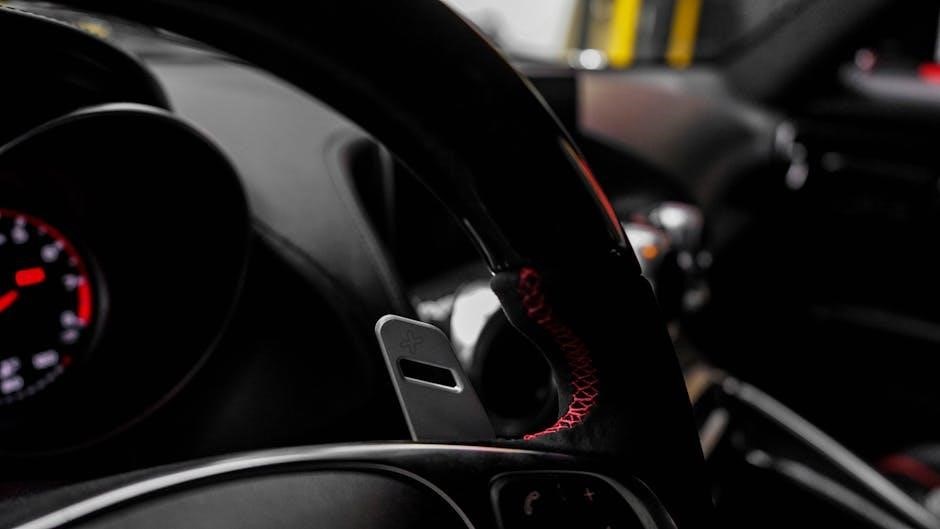
Paddle shifters represent a fascinating intersection of automated technology and driver control. Often referred to as a “flappy-paddle gearbox,” this system allows drivers to manually select gears without the traditional clutch pedal and gear lever. These shifters are conveniently mounted behind the steering wheel, typically on either side, enabling quick and intuitive gear changes.
Unlike a conventional manual transmission requiring physical coordination of the clutch, shifter, and throttle, paddle shifters operate electronically. Pulling a paddle signals the transmission control unit to upshift, while pushing a paddle prompts a downshift. This system offers a blend of automation and engagement, appealing to drivers who desire a more involved driving experience than a standard automatic but without the complexities of a full manual.
How Paddle Shifters Work: The Technology Behind the Shift
Paddle shifters don’t directly engage gears mechanically; instead, they function as input devices for the vehicle’s transmission control unit (TCU). When a paddle is activated, it sends an electronic signal to the TCU, which then instructs actuators to execute the gear change. These actuators, depending on the system, can be hydraulic or electro-mechanical.
The TCU considers various factors like engine speed, vehicle speed, throttle position, and selected driving mode to ensure smooth and optimal shifts. This intelligent control prevents harsh gear changes and protects the transmission. Essentially, paddle shifters provide a manual-like interface to an automated transmission, offering a responsive and engaging driving experience while leveraging the benefits of electronic precision.
Types of Paddle Shifter Systems
Paddle shifter technology isn’t monolithic; two primary systems dominate the market: hydraulic and electro-mechanical. Hydraulic paddle shifters utilize fluid pressure to actuate the gear changes within the transmission. These systems often feel more robust and provide a distinct tactile feedback to the driver, enhancing the connection.
Electro-mechanical paddle shifters, conversely, employ electric motors and gears to perform shifts. They are generally lighter, more compact, and offer quicker response times due to the absence of hydraulic lag. Modern systems increasingly favor electro-mechanical designs for their efficiency and precision, contributing to a sportier and more refined driving experience.
Hydraulic Paddle Shifters
Hydraulic paddle shifter systems represent a more traditional approach to automated gear selection. They function by utilizing pressurized hydraulic fluid to engage and disengage clutches and select the desired gear within the transmission. When a paddle is activated, it signals a hydraulic control unit, initiating a sequence of valve operations.
This fluid pressure then physically moves components within the gearbox, resulting in a gear change. Drivers often appreciate the substantial, tactile feedback provided by hydraulic systems, creating a more connected and engaging feel. While potentially slower than electro-mechanical counterparts, they offer a robust and reliable shifting experience.
Electro-Mechanical Paddle Shifters
Electro-mechanical paddle shifter systems represent a more modern and technologically advanced approach to gear changes. Unlike hydraulic systems, these rely on electric motors and actuators to control the clutch and gear selection processes within the transmission. When a paddle is pulled, it sends an electronic signal to a transmission control unit (TCU).
The TCU then commands the electric motors to precisely engage the appropriate gear. This results in exceptionally fast and smooth shifts, often quicker than those achievable with a traditional manual or hydraulic paddle system. Electro-mechanical systems typically offer lighter weight and greater efficiency, contributing to improved performance and responsiveness.
Advantages of Paddle Shifters
Paddle shifters offer a compelling blend of convenience and control, appealing to drivers seeking a more engaging experience than a traditional automatic. Faster Shifting Speeds are a key benefit, allowing for quicker gear changes than most manual drivers can achieve, particularly during performance driving.
Convenience and Ease of Use are significant advantages, especially in traffic, as they eliminate the need to fully depress a clutch pedal. This translates to a less fatiguing driving experience. Finally, paddle shifters deliver a Sportier Driving Experience, providing a sense of connection and control that enhances driver enjoyment without the complexities of a manual gearbox.
Faster Shifting Speeds
One of the most significant advantages of paddle shifters lies in their ability to execute gear changes with remarkable speed. Unlike a traditional manual transmission where the driver must physically move the shifter and coordinate with the clutch, paddle shifters utilize electronic or hydraulic systems for near-instantaneous shifts.
This rapid shifting capability is particularly beneficial during spirited driving or on a racetrack, where minimizing gear change time directly translates to improved acceleration and lap times. The system’s precision ensures smoother transitions, maximizing power delivery and enhancing overall performance. This speed often surpasses the capabilities of even skilled manual drivers.
Convenience and Ease of Use
Paddle shifters offer a compelling blend of control and convenience, particularly appealing to drivers who desire a more engaging experience than a traditional automatic but without the complexities of a manual gearbox. They eliminate the need for a clutch pedal, simplifying the driving process, especially in stop-and-go traffic where constant shifting can be tiresome.
Positioned conveniently behind the steering wheel, the paddles allow for intuitive gear selection without removing hands from the steering wheel, enhancing safety and control. This ease of use makes paddle shifters accessible to a wider range of drivers, bridging the gap between automated and manual driving experiences.
Sportier Driving Experience
Paddle shifters inject a dose of dynamism into the driving experience, mimicking the feel of a manual transmission without the physical demands. Drivers can actively select gears, maintaining control over the engine’s RPMs and optimizing performance for spirited driving or challenging road conditions. This responsiveness fosters a more connected and engaging feel behind the wheel.
The ability to downshift quickly for corner entry or hold a gear during acceleration provides a level of control often absent in fully automatic systems. This direct involvement enhances the sense of driving pleasure, appealing to enthusiasts who prioritize a sportier, more interactive connection with their vehicle.
Disadvantages of Paddle Shifters
Despite their advantages, paddle shifters aren’t without drawbacks. A common critique is a feeling of disconnection from the driving experience; the lack of a physical gear lever can diminish the sense of mechanical engagement. Incorrect gear selection is also a potential issue, especially for less experienced drivers, potentially leading to suboptimal performance or even strain on the drivetrain.

Furthermore, paddle shifters rely heavily on electronic systems. A malfunction within these systems can render the shifting mechanism inoperable, leaving the driver reliant on the automatic mode. This dependence on technology introduces a potential point of failure not present in traditional manual transmissions, raising concerns about reliability.
Can Feel Disconnected
One of the primary criticisms leveled against paddle shifters is the sensation of detachment they can create between the driver and the vehicle. Unlike a traditional manual gearbox where the driver physically manipulates the gear lever, paddle shifters operate electronically. This removes the tactile feedback and direct mechanical link that many enthusiasts cherish.
The absence of a clutch pedal further contributes to this feeling of disconnection. The nuanced control over power delivery and engine braking, inherent in manual driving, is diminished. While paddle shifters offer quick shifts, they can lack the immersive, engaging experience that defines driving a true manual transmission, leaving some drivers wanting more.
Potential for Incorrect Gear Selection
Despite their convenience, paddle shifters introduce the possibility of selecting an inappropriate gear, particularly for less experienced drivers. The speed at which shifts can be executed, combined with a lack of direct mechanical feedback, can lead to unintentional downshifts or upshifts. This is especially true during spirited driving or in challenging conditions.
A mistimed shift can disrupt the vehicle’s balance, reduce acceleration, or even cause a jarring experience for passengers. While modern systems often include safeguards, they aren’t foolproof. Drivers relying solely on paddle shifters must maintain focused concentration to ensure optimal gear selection, unlike the more intuitive feel of a manual transmission.
Reliance on Electronic Systems
Paddle shifter systems are fundamentally dependent on complex electronic controls. This reliance introduces a potential point of failure; a malfunction within the transmission control unit (TCU) or associated sensors can render the paddle shifters inoperable, potentially reverting the transmission to a default mode or even causing a complete system shutdown.
Unlike a purely mechanical manual gearbox, troubleshooting and repairing electronic issues often require specialized diagnostic tools and expertise. Furthermore, software glitches or compatibility problems can occasionally arise, impacting performance. This inherent electronic dependency distinguishes paddle shifters from the robust simplicity of a traditional manual transmission, where mechanical issues are often more straightforward to diagnose and resolve;
Manual vs. Paddle Shifters: A Direct Comparison
This section delves into a head-to-head analysis, contrasting manual transmissions and paddle shifters across key areas like performance, feel, economy, and cost.
Performance: Acceleration and Track Times
When evaluating performance, the landscape between manual transmissions and paddle shifters becomes nuanced. Traditionally, skilled drivers in manual cars could achieve quicker acceleration and faster lap times due to complete control over gear selection and engine RPM. However, modern paddle shifter systems, particularly those integrated with dual-clutch transmissions, are rapidly closing – and sometimes surpassing – this gap.
The speed of shifts is a critical factor. Paddle shifters offer incredibly rapid gear changes, often faster than a human can consistently achieve with a manual. This minimizes interruption in power delivery, leading to improved acceleration. On a track, this advantage is magnified, allowing drivers to maintain momentum through corners. While a skilled manual driver can still be competitive, the consistency and speed of paddle shifters provide a significant edge in many scenarios.
Driving Experience: Engagement and Feel
The driving experience is where the most significant philosophical divide exists between manual transmissions and paddle shifters. Manuals offer a deeply engaging experience, demanding active participation from the driver – a direct connection to the mechanics of the vehicle. The tactile feedback of the shifter, the precise clutch control, and the satisfaction of a perfectly executed gear change contribute to a sense of involvement unmatched by other systems.
Paddle shifters, conversely, provide a sportier feel than a traditional automatic but often lack the same level of visceral connection. While they allow for manual gear selection, the experience can feel somewhat detached, relying on electronic systems rather than direct mechanical linkage. Some drivers find this disconnection diminishes the overall enjoyment, while others appreciate the convenience and responsiveness they offer.
Fuel Economy: Real-World Differences
Historically, manual transmissions often boasted superior fuel efficiency due to their simpler mechanical design and lack of torque converter losses. However, modern automatic transmissions, and those paired with paddle shifters, have significantly narrowed this gap. Advanced programming and efficient designs now allow many automatics to match or even exceed the fuel economy of their manual counterparts.
Real-world fuel economy differences largely depend on driving style. A skilled manual driver can maximize efficiency, but an unskilled driver may experience lower MPG due to improper shifting. Paddle shifters offer a degree of control that can improve fuel economy if used judiciously, but the temptation for spirited driving can negate any potential gains. Ultimately, the difference is often marginal.
Cost: Purchase Price and Maintenance
Generally, vehicles equipped with manual transmissions have a lower initial purchase price compared to those with automatic transmissions or paddle shifter systems. This is due to the simpler manufacturing process and fewer components involved in a manual gearbox. However, this price difference is shrinking as manual transmissions become less common.
Maintenance costs can also vary. Manual transmissions typically require less frequent and less expensive servicing – clutch replacements being the primary expense. Paddle shifter systems, being electronically controlled, may incur higher repair costs if electronic components fail. Automatic transmissions, including those with paddle shifters, often require fluid changes and potentially more complex repairs over their lifespan, potentially exceeding manual transmission upkeep costs.
The Future of Shifting Technologies
Automated Manual Transmissions (AMTs) and AI-driven transmission control are emerging, potentially blending the efficiency of manuals with the convenience of automatics.

The Rise of Automated Manual Transmissions (AMTs)
Automated Manual Transmissions (AMTs) represent a fascinating bridge between the traditional manual gearbox and fully automatic systems. Essentially, an AMT utilizes the mechanical setup of a manual transmission – gears, clutch – but employs actuators and computer control to execute shifts without direct driver intervention. This allows for the efficiency and direct feel often associated with manuals, while removing the need for a clutch pedal and complex footwork.
Early AMTs faced criticism for jerky shifts, but advancements in software and actuator technology have significantly smoothed out the experience. They offer a compelling alternative, particularly for those seeking fuel economy and a degree of driver engagement without the demands of a conventional manual. The future may see AMTs becoming more prevalent, offering a refined and efficient driving experience.
The Role of Artificial Intelligence in Transmission Control
Artificial Intelligence (AI) is poised to revolutionize transmission control, moving beyond pre-programmed shift patterns to truly adaptive systems. AI algorithms can analyze a multitude of data points – driving style, road conditions, engine load, even predicted traffic flow – to optimize gear selection in real-time. This goes far beyond the capabilities of both traditional manuals and even current paddle shifter systems.
Imagine a transmission that anticipates your needs, downshifting before a hill or holding a gear for optimal acceleration. AI can learn individual driver preferences, creating a personalized driving experience. Furthermore, AI can enhance efficiency, minimizing fuel consumption and maximizing performance. The integration of AI promises a future where transmissions are not just reactive, but proactively intelligent.