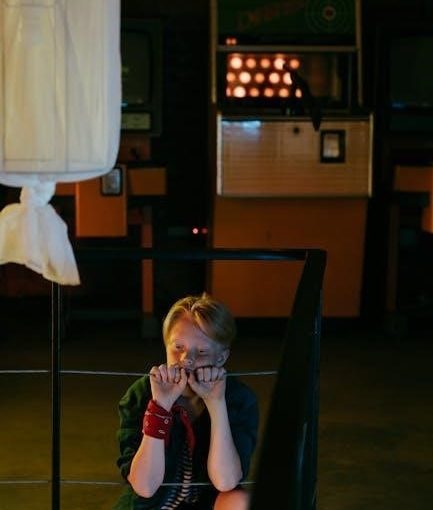
Historical Context of the Play (1928)
Machinal, debuting in 1928, emerged during a period of rapid industrialization and societal shifts in America, mirroring anxieties about modernity and technological advancement․
The play’s premiere coincided with the Roaring Twenties, a time of both prosperity and underlying social tensions, influencing its themes of alienation․
The Play’s Expressionist Roots
Machinal is deeply rooted in the Expressionist movement that flourished in the early 20th century, particularly in German theatre and art․ This artistic style sought to portray subjective experience and inner turmoil, rejecting realism in favor of distorted representations of reality․
The play employs techniques characteristic of Expressionism, such as fragmented scenes, stark lighting, and symbolic staging, to convey the protagonist’s psychological state and the dehumanizing effects of modern life․
Like other Expressionist works, Machinal utilizes a non-naturalistic style, prioritizing emotional impact over narrative coherence․ The repetitive dialogue and mechanical movements of the characters further emphasize the play’s Expressionist aesthetic, reflecting a world stripped of individuality and authenticity․
This stylistic choice powerfully underscores the play’s critique of industrialization and societal pressures․
The Young Woman: A Central Figure
The Young Woman in Machinal serves as the play’s central, yet largely unnamed, protagonist․ She embodies the stifled individuality and repressed desires of women in the 1920s, trapped within the confines of societal expectations and a rapidly industrializing world․
Her journey depicts a descent into alienation and despair, as she navigates a series of predetermined roles – daughter, wife, mother – without agency or fulfillment․ The performer portraying her utilizes vocal techniques to convey oppression and a growing mental breakdown․
The character’s fragmented identity and lack of self-expression highlight the dehumanizing impact of modern life, making her a powerful symbol of female struggle and societal critique․
Her ultimate act is often interpreted as a desperate attempt to reclaim control over her own destiny․
The Adding Machine: Symbolism and Significance
The adding machine in Machinal is arguably the play’s most potent symbol, representing the dehumanizing forces of industrialization and the monotonous, repetitive nature of modern work․ It embodies the Young Woman’s existence, reducing her to a mere cog in a larger, uncaring machine․
The machine’s relentless clicking and mechanical precision mirror the societal pressures and lack of emotional connection that define her life․ It signifies the loss of individuality and the reduction of human beings to quantifiable units of production․
The play integrates technology into the theatrical action, making the machine itself a dramatic element, actively moving rather than simply being a backdrop․
Ultimately, the adding machine foreshadows the Young Woman’s fate, suggesting her inevitable breakdown under the weight of societal expectations․
Other Key Characters and Their Roles
Beyond the Young Woman, Machinal features characters who embody societal forces shaping her destiny․ The Mother represents traditional expectations and stifling domesticity, relentlessly pushing her daughter towards conventional roles․
The Adding Machine Boss personifies the impersonal, exploitative nature of corporate power, viewing employees as mere numbers․ The Husband, though initially offering escape, becomes another source of confinement and emotional emptiness․

Even minor characters, like the Reporter covering the sensational Snyder-Gray trial (a real-life case mirroring the play’s themes), highlight the media’s role in sensationalizing tragedy․
These figures collectively illustrate the oppressive structures that contribute to the Young Woman’s alienation and ultimate downfall, showcasing a bleak portrait of modern life․
Industrialization and Dehumanization
Machinal powerfully critiques the dehumanizing effects of rapid industrialization in 1920s America․ The play depicts individuals reduced to cogs in a machine, their lives dictated by the relentless rhythm of factory work and societal expectations․
The constant repetition of mechanical sounds and movements mirrors the monotony and alienation experienced by workers․ Characters are stripped of individuality, becoming interchangeable parts within a larger, impersonal system․
The Adding Machine itself symbolizes this process, representing the cold, calculating forces that control human destiny․ This relentless mechanization crushes the spirit and leads to a profound sense of emptiness and despair․
The play suggests that unchecked industrial progress comes at the cost of human connection and authentic experience․
The Oppression of Women in the 1920s
Machinal starkly portrays the limited roles and pervasive oppression faced by women in the 1920s․ The Young Woman’s journey highlights the societal pressures to conform to expectations of marriage and motherhood, denying her agency and self-determination․
She is treated as a commodity, her value defined by her ability to fulfill domestic duties and bear children․ The play exposes the stifling constraints placed upon women’s desires and ambitions, showcasing a lack of genuine emotional connection․
The courtroom scenes reveal a judgmental society quick to condemn her for transgressing societal norms, reflecting the double standards of the era․
Her ultimate fate underscores the tragic consequences of a system that denies women control over their own lives․
Loss of Individuality and Identity
Machinal powerfully depicts the erosion of individuality in a modern, industrialized world․ The Young Woman is reduced to a number, a cog in the machine of societal expectations, stripped of her personal identity through repetitive routines and dehumanizing interactions․
Her name is rarely used; she’s often referred to as “the girl,” emphasizing her lack of distinctiveness․ The fragmented dialogue and staccato rhythms mirror her fractured sense of self, reflecting the alienation of modern life․

The play suggests that the relentless pace of industrialization and the pressures of conformity stifle authentic expression, leading to a profound sense of emptiness and disconnection․
Ultimately, her breakdown and tragic end symbolize the devastating consequences of losing one’s sense of self․
Expressionistic Staging and Set Design
Machinal’s staging boldly embraced Expressionist techniques to visually represent the protagonist’s internal state and the dehumanizing forces surrounding her․ The set design, rather than aiming for realism, employed stark, angular shapes and minimal props to create a sense of alienation and confinement․
Scenes often shifted abruptly, mirroring the Young Woman’s fragmented psyche and the chaotic nature of modern life․ Lighting was used dramatically, with harsh contrasts and shadows, to emphasize emotional turmoil․
The stage directions call for actors to move mechanically, like automatons, further reinforcing the theme of individuals reduced to mere components of a larger machine․
This deliberate departure from naturalistic conventions served to heighten the play’s emotional impact and convey its critical message․
Fragmented Dialogue and Repetition
Machinal’s dialogue is deliberately fragmented and disjointed, reflecting the breakdown of communication and the alienation experienced by the Young Woman; Conversations are often composed of short, clipped phrases and repetitive statements, mirroring the monotony of industrial labor and the characters’ emotional numbness․
This stylistic choice emphasizes the lack of genuine connection between individuals in a modern, mechanized society․ The repetition of phrases, like mechanical sounds, underscores the dehumanizing effects of routine and societal expectations․
The play eschews traditional dramatic structure, opting for a series of vignettes connected by thematic resonance rather than linear narrative․
This fragmented approach forces the audience to actively piece together the Young Woman’s story and confront the play’s unsettling themes․
Use of Sound and Machinery as Dramatic Elements
Machinal boldly integrates sound and machinery directly into the dramatic action, transforming the stage into a representation of the industrial world․ The relentless sounds of typewriters, adding machines, and trains aren’t merely background noise; they become active characters, symbolizing the oppressive forces shaping the Young Woman’s life․
These mechanical sounds underscore the dehumanizing aspects of modern labor and the feeling of being trapped within a system․ The play’s staging often features moving sets and mechanical elements, further emphasizing the sense of a world controlled by machinery․
This innovative use of technology was groundbreaking for its time, anticipating later developments in experimental theatre․
Critique of Capitalism and Modern Life
Machinal presents a scathing critique of capitalism and the alienating effects of modern life in the 1920s․ The play depicts a society obsessed with efficiency and productivity, reducing individuals to mere cogs in a vast, impersonal machine․

The Young Woman’s journey illustrates the loss of individuality and the stifling constraints imposed by societal expectations and economic pressures․ Her existence is defined by repetitive tasks and superficial relationships, highlighting the emptiness at the heart of the American Dream․
The play questions the values of a society prioritizing material success over human connection and emotional fulfillment, offering a bleak vision of modernity’s consequences․
Feminist Interpretations of the Play
Machinal has garnered significant attention from feminist critics, who view it as a powerful indictment of patriarchal structures and the oppression of women in the 1920s․
The Young Woman’s character embodies the limited agency and societal expectations placed upon women during that era, trapped within roles of wife, mother, and worker with little opportunity for self-determination․
Her eventual act of violence is often interpreted not as inherent malice, but as a desperate attempt to reclaim control over her own life and escape the suffocating constraints imposed by a male-dominated society․ The play’s exploration of female subjectivity and rebellion continues to resonate with feminist audiences today․
Connections to Real-Life Ruth Snyder Case
Machinal shares striking parallels with the highly publicized 1927 murder case of Ruth Snyder, a New York housewife who was executed for killing her husband with her lover․
The Snyder case captivated the nation with its sensational details and media frenzy, mirroring the play’s depiction of a woman driven to desperate measures within a stifling marriage․
While playwright Sophie Treadwell denied direct inspiration, the thematic resonances are undeniable; both narratives explore female frustration, marital dissatisfaction, and the societal pressures that can lead to extreme acts․ The play, like the Snyder case, sparked debate about female agency and the consequences of societal constraints․
The Play’s Interpretation of Divine Retribution
Machinal presents a complex interpretation of divine retribution, particularly concerning the Young Woman’s ultimate fate․ Some analyses, as noted in scholarly articles, view her execution as a form of karmic justice for her actions․
However, the play simultaneously critiques the societal forces that contribute to her downfall, questioning whether the retribution is truly divine or a consequence of a dehumanizing system․
The ending isn’t a simple moral judgment, but rather a chilling demonstration of how societal structures and relentless pressures can crush individuality, leading to a tragic, seemingly predetermined outcome․ Poloniis’ end is interpreted as an act of divine retribution․
Vocal Techniques for Portraying Oppression
Machinal demands specific vocal techniques to effectively portray the Young Woman’s escalating oppression and mental breakdown․ Performers must utilize heavy breathing, reflecting her mounting anxiety and suffocation within societal constraints․
Monotonous delivery, mirroring the repetitive nature of her work and life, is crucial․ Vocal fragmentation – broken sentences and halting speech – can illustrate her fractured psyche․
Furthermore, a gradual loss of vocal projection and resonance can symbolize the erosion of her identity and agency․ The performer will portray the Young Woman using vocal skills to convey her oppression․
Physicality and Movement in Representing Mental Breakdown
Machinal’s depiction of the Young Woman’s descent requires a physicality that embodies increasing fragmentation and distress․ Initially, movements might be mechanical and robotic, reflecting her dehumanized existence․
As the play progresses, incorporate jerky, uncontrolled gestures and tremors to signify her unraveling mental state․ Repetitive, compulsive movements can mirror the monotony of her life and growing anxiety․
Physical shrinking and collapsing postures can visually represent her loss of agency and spirit․ The performer will utilize physicality to convey the character’s mental breakdown, mirroring her internal turmoil․
Online Archives and Digital Libraries
Researchers exploring Machinal can access digitized versions of the play script through various online archives and digital libraries․ Resources like Project Gutenberg and Internet Archive often host public domain texts, potentially including early editions․
University library databases, such as JSTOR and ProQuest, provide access to scholarly articles and critical analyses of the play․ Digital collections specializing in American drama, like those maintained by major research institutions, are invaluable․
Furthermore, searching for “Night-Mother-script․pdf” may yield related materials, though verifying source credibility is crucial․ These digital resources facilitate comprehensive research․
Educational Resources and Course Materials
Machinal is frequently incorporated into courses on modern drama, American literature, and feminist studies․ Instructors often utilize readily available play scripts, including PDF versions found through online searches, though copyright considerations apply․
Course materials commonly include critical essays analyzing the play’s Expressionist techniques, themes of dehumanization, and portrayal of women’s oppression․ Supplementary readings explore the historical context of the 1920s and the Ruth Snyder case․
Assignments may involve scene analysis, character studies, or research papers examining the play’s enduring relevance․ The discipline is often placed within Block 1 of educational programs․
Technology as Machinery of the Theater
Machinal uniquely integrated technology into its theatrical action, transforming stage machinery beyond mere backdrop․ The play utilized sound and mechanical elements – representing the relentless rhythm of industrial life – as integral dramatic components, not just scenic additions․
This approach foreshadowed later explorations of technology in performance, where the stage itself became a machine mirroring the play’s themes․ The “machinery of the theater” actively drove the narrative, influencing pacing and emotional impact․
Early scientists, even sixty years ago, recognized the potential of computers, a concept reflected in the play’s depiction of a mechanized world․
Early Integration of Technology in Dramatic Action
Machinal stands as a pioneering example of early 20th-century drama actively incorporating technology into the dramatic action itself, rather than simply as a visual element․
The play moved beyond traditional staging, employing soundscapes mimicking factory noises and repetitive movements to embody the dehumanizing effects of industrialization․ This wasn’t just about representing a machine age; it was about becoming the machine on stage․
This innovative approach, predating widespread technological integration in theater, utilized active movement and sound to convey the protagonist’s entrapment, foreshadowing future experimental performances․
Challenges in Translating Expressionistic Dialogue

Translating Machinal’s expressionistic dialogue presents unique hurdles due to its fragmented nature and reliance on repetition, aiming to convey psychological states rather than realistic conversation․
The play’s stark, telegraphic style, mirroring the mechanical world, loses nuance when rendered into other languages; capturing the rhythmic intensity and emotional weight proves difficult․
Maintaining the deliberate awkwardness and the sense of alienation inherent in the original text requires translators to prioritize conveying the feeling over literal accuracy, a complex balancing act․ The “way to simultaneous translation” is complicated by this․
The Play’s Relevance to Studies in Simultaneous Translation
Machinal offers a compelling case study for simultaneous translation training due to its highly stylized and fragmented dialogue, demanding rapid adaptation and creative problem-solving from interpreters․
The play’s repetitive phrases and abrupt shifts in tone challenge interpreters to convey emotional impact without relying on conventional sentence structure, pushing the boundaries of linguistic equivalence․
Furthermore, the play’s exploration of dehumanization and alienation provides a rich context for examining how language can both reflect and shape psychological states, crucial for nuanced interpretation․ The text highlights how “when the computer…American scientists…” challenges translation․
The Play’s Exploration of Modern Media
Machinal, though predating widespread mass media as we know it, foreshadows its impact through its depiction of a society increasingly defined by impersonal forces and repetitive routines, mirroring the effects of emerging technologies․
The play’s fragmented scenes and mechanical dialogue can be interpreted as a theatrical representation of the fragmented experience of modernity, akin to the disjointed flow of information in early 20th-century newspapers and advertisements․
The play’s focus on sensationalism, as seen in connections to the Ruth Snyder case, anticipates the rise of tabloid journalism and the public’s fascination with crime and scandal, reflecting a growing engagement with mediated realities․ The journal “Наука телевидения” explores digital media’s impact․
Research on Digital Media and the Arts

Machinal provides a compelling case study for exploring the intersection of digital media and performance, particularly concerning the representation of alienation and dehumanization in a technologically driven world․
Scholarly investigations can examine how digital tools might be used to recreate the play’s expressionistic staging and fragmented narrative, enhancing its impact on contemporary audiences․
Research could also focus on the play’s relevance to studies of digital identity and the loss of individuality in online spaces, drawing parallels between the Young Woman’s experience and the pressures of social media․ The journal “Наука телевидения” is dedicated to research in digital media arts․
Discipline Placement within Educational Programs
Machinal’s complex themes and innovative theatrical techniques position it ideally within curricula spanning multiple disciplines, including Modern Drama, American Literature, and Gender Studies․
As indicated, the discipline relating to this play falls within Block 1 and constitutes a foundational component of educational programs․ Its study necessitates a strong understanding of historical context and dramatic theory․
Furthermore, Machinal serves as a valuable text for courses exploring the development of Expressionism and the impact of industrialization on the human psyche․ It also provides a platform for discussing feminist perspectives and the representation of women in early 20th-century art․
Use in Courses on Modern Drama and Feminist Literature
Machinal is powerfully utilized in Modern Drama courses, showcasing Expressionism, and in Feminist Literature, analyzing the Young Woman’s oppression and societal constraints․

Further Research and Scholarly Articles
Expanding research on Machinal necessitates exploring academic databases like JSTOR, Project MUSE, and Google Scholar, utilizing keywords such as “Expressionism,” “feminist theatre,” and “industrialization․”

Scholarly articles often delve into the play’s connections to the Ruth Snyder case, offering comparative analyses of media sensationalism and societal judgment․ Investigations into the play’s reception history reveal evolving interpretations regarding its critique of capitalism and the dehumanizing effects of modern life․
Furthermore, research should consider the play’s innovative staging techniques and the integration of technology, examining how these elements contribute to its overall impact․ Citations from critical works on American drama and feminist theory will prove invaluable for a comprehensive understanding․
Exploring Citations and Academic Databases
Locating relevant scholarship on Machinal begins with utilizing comprehensive academic databases․ JSTOR and Project MUSE are excellent starting points, offering peer-reviewed articles and critical essays․ Google Scholar provides a broader search, encompassing books, theses, and conference papers․
Effective search terms include “Sophie Treadwell,” “Machinal analysis,” “Expressionist drama,” and “women in 1920s theatre․” Examining citation trails – following the sources cited within relevant articles – expands research exponentially․
Pay attention to publications focusing on American drama, feminist literature, and the history of technology in theatre․ Digital libraries and online archives often contain primary source materials, enriching contextual understanding․