
Understanding Men’s Suit Sizing: A Comprehensive Guide
Navigating menswear requires understanding fit and size; a suit size calculator, alongside accurate charts, streamlines the process, saving valuable time and effort.
Suit sizing can be deceptively complex, differing significantly from standard clothing purchases. Unlike t-shirts or jeans, a precise fit is paramount for a suit to look its best, impacting both comfort and overall appearance. Understanding the nuances of suit sizing is crucial, as an ill-fitting suit can detract from your style and confidence.
There are two essential components to consider: fit and size. Fit refers to the suit’s overall shape – slim, regular, or relaxed – while size denotes specific measurements. Choosing the right size is trickier than with other garments, necessitating accurate measurements and a grasp of sizing conventions. Resources like suit size calculators and detailed charts can be invaluable tools in this process, helping you save time and ensure a more successful purchase.
Why Accurate Suit Sizing Matters
Precise suit sizing isn’t merely about aesthetics; it fundamentally impacts how you present yourself and how comfortable you feel. A well-fitted suit projects confidence and sophistication, while a poorly sized one can appear sloppy and detract from your overall impression. Beyond appearance, comfort is key – a suit that’s too tight restricts movement, while one that’s too loose lacks structure.

Accurate sizing ensures the suit drapes correctly, accentuating your physique and creating a flattering silhouette. It also affects the suit’s longevity; constant strain on seams due to a poor fit can lead to premature wear and tear. Investing time in proper measurement and understanding sizing charts ultimately saves money by reducing the need for frequent alterations or replacements.
The Two Key Measurements: Chest and Waist
When determining your suit size, two measurements reign supreme: chest and waist. These form the foundation for finding a suitable jacket and trousers. Chest measurement, taken around the fullest part of your chest, dictates the jacket’s size, ensuring a comfortable yet defined fit across the shoulders and body. Waist measurement, typically taken at your natural waistline, is crucial for pant sizing, influencing the fit around your midsection and hips.
Accuracy is paramount; a slight variation in either measurement can significantly alter the suit’s fit. Always measure yourself – or better yet, have a friend assist – wearing minimal clothing for the most precise results. These two numbers are the starting point for navigating suit size charts and finding a garment that complements your build.
Understanding Suit Jacket Sizing
Suit jacket sizing hinges on a precise understanding of chest and shoulder measurements. The chest measurement directly correlates to jacket size, but it’s not the sole determinant of a good fit. Shoulder width is equally vital, impacting how the jacket sits and drapes on your frame. A properly fitted jacket should comfortably accommodate your chest without feeling restrictive, and the shoulder seams should lie flatly on your shoulders.
Pay close attention to how the jacket feels when buttoned; there shouldn’t be excessive pulling or gaping. The length of the jacket is also important, typically covering the seat. Considering these factors ensures a polished and flattering silhouette.

Chest Measurement & Jacket Size

Determining your chest measurement is the foundational step in finding the right suit jacket size. Use a measuring tape to measure around the fullest part of your chest, keeping the tape level and comfortably snug – not tight. This measurement, typically in inches, directly translates to your jacket size. However, remember that suit sizing isn’t always consistent across brands.
A 40-inch chest, for example, generally corresponds to a size 40 jacket, but variations exist. It’s crucial to consult specific brand size charts. If your measurement falls between sizes, consider your build; a broader chest might necessitate sizing up for comfort and mobility.
Shoulder Measurement & Its Importance
The shoulder measurement is arguably as critical as the chest measurement when selecting a suit jacket. It dictates how the jacket sits on your frame and significantly impacts overall fit. Measure from the outside edge of one shoulder to the outside edge of the other, across the back. This measurement should align closely with the jacket’s shoulder width.

A properly fitted jacket will have the shoulder seams lying flat and ending precisely at the edge of your natural shoulder. Too tight, and movement will be restricted; too loose, and the jacket will appear sloppy. Shoulder fit is harder to alter than other areas, making accurate measurement paramount for a polished look.
Understanding Suit Pant Sizing
Suit pant sizing relies on two key measurements: waist and inseam. Unlike off-the-rack trousers, suit pants are designed for a more precise fit, complementing the jacket’s tailored silhouette. Accurate measurements are crucial for achieving a refined appearance and comfortable wear. Begin by determining your waist size – measure around your natural waistline, keeping the tape comfortably snug, not tight.
Next, measure the inseam, which is the length from your crotch to the bottom of where you want the pants to fall on your shoe; Proper pant length is essential for a modern, sophisticated look. Remember alterations are often needed to achieve a perfect fit.
Waist Measurement & Pant Size
Determining your accurate waist measurement is the foundation of well-fitting suit pants. Use a flexible measuring tape and position it around your natural waistline – typically, this is slightly above your hip bones. Ensure the tape is level and comfortably snug against your skin, avoiding excessive tightness. Do not suck in your stomach or expand your chest during measurement; maintain a relaxed, natural posture.
Record the measurement in inches; This number will directly correlate to your pant size, though variations exist between brands. Generally, a waist measurement of 32 inches translates to a pant size of 32, but always consult the specific brand’s size chart for accuracy.
Inseam Measurement & Pant Length
Accurately measuring your inseam is crucial for achieving the correct suit pant length. The inseam is the distance from your crotch to the bottom of your ankle, where the pant leg ideally rests. The best way to measure is to have a friend assist you while wearing shoes similar to those you’ll wear with the suit.
Stand straight with your feet slightly apart. Measure from your crotch, along the inside of your leg, down to where you want the pant hem to fall on your shoe. A slight break – a gentle crease where the pant leg meets the shoe – is a classic and versatile choice. Record this measurement in inches; this is your inseam.
Standard Suit Sizes: A Breakdown
Understanding standard suit sizes is fundamental to finding a well-fitting garment. Sizes vary between American and European systems, creating potential confusion. American sizes typically focus on chest size and length (Regular, Short, Long, Extra Long), denoted as “40R,” for example. European sizes utilize a numerical system, often correlating to chest circumference in centimeters.
Letter sizes, like 38R, 40L, and 42S, are common. The number represents the jacket chest size, while the letter indicates the length. ‘R’ (Regular) is standard, ‘S’ (Short) for shorter torsos, and ‘L’ (Long) for taller builds. Knowing these distinctions is vital when shopping, especially online, to ensure a proper initial fit before alterations.
American vs. European Suit Sizes
Navigating suit sizes requires understanding the differences between American and European standards. American sizing primarily centers on chest measurement, paired with length indicators like Regular (R), Short (S), or Long (L). European sizing, conversely, often uses a numerical system directly relating to chest circumference measured in centimeters – a system less familiar to many.
Direct conversion isn’t always precise; a 40R American suit doesn’t neatly translate to a specific European number. It’s crucial to consult brand-specific size charts, as interpretations can vary. Always prioritize checking measurements rather than relying solely on converted sizes to avoid fit issues and ensure a comfortable, stylish outcome.
Letter Sizes (e.g., 38R, 40L) Explained
Suit sizes commonly utilize a letter-based system, combining a numerical jacket size with a letter denoting length. The number, like ’38’ or ’40’, generally corresponds to chest measurement in inches, though variations exist between brands. The letter suffix indicates the jacket’s length – ‘R’ for Regular, ‘S’ for Short, ‘L’ for Long, and ‘XL’ for Extra Long.
‘Regular’ suits are designed for average height, while ‘Short’ suits suit shorter frames, and ‘Long’ suits accommodate taller individuals. Understanding these designations is vital for achieving a proper fit. Always cross-reference with specific brand size charts, as interpretations can differ, ensuring the jacket sleeves and overall length are appropriate for your build.
Decoding Suit Size Codes: R, S, L, XL
The letters appended to numerical suit sizes – R, S, L, and XL – signify jacket length, crucial for a flattering silhouette. ‘R’ denotes ‘Regular,’ fitting most body types with standard proportions. ‘S’ stands for ‘Short,’ designed for individuals with shorter torsos and arms, preventing excessive fabric bunching.
‘L’ indicates ‘Long,’ catering to taller men needing extra length in the sleeves and jacket body. ‘XL’ represents ‘Extra Long,’ accommodating those exceeding the typical long proportions. These codes aren’t standardized across all brands; therefore, consulting specific size charts is essential. Proper length ensures the jacket buttons correctly and complements your overall physique, enhancing your appearance.
What Do ‘R’, ‘S’, ‘L’, and ‘XL’ Indicate?
These suffixes define a suit jacket’s length, impacting fit and proportion. ‘R’ (Regular) suits the average build, offering a balanced length in both the body and sleeves. ‘S’ (Short) is tailored for men with shorter frames, preventing a boxy appearance and ensuring comfortable arm movement.
‘L’ (Long) suits taller individuals, providing adequate coverage and sleeve length. ‘XL’ (Extra Long) caters to those significantly above average height, offering maximum length for a proportionate fit. It’s vital to remember these are relative terms; an ‘L’ in one brand might differ from another. Always prioritize checking individual brand size guides for accuracy and optimal results.
Taking Accurate Measurements: A Step-by-Step Guide
Precise measurements are crucial for a well-fitting suit. You’ll need a flexible measuring tape – a metal one isn’t ideal. Ideally, have a friend assist for accuracy, as reaching certain areas can be difficult. Stand naturally, relaxed, and wear similar clothing to what you’d wear under a suit.
Begin with chest measurement, wrapping the tape around the fullest part of your chest, keeping it level. Next, measure your waist at its natural point, not too tight. Accurate measurements are the foundation of finding the perfect suit size, ensuring both comfort and style. Don’t guess – measure!
Tools You’ll Need (Measuring Tape)
The cornerstone of accurate suit sizing is a reliable measuring tape. Forget rigid metal tapes; opt for a flexible, non-stretch fabric or vinyl tape for comfortable and precise readings. Ensure the tape has clear, easily readable markings in inches and centimeters, offering versatility. A retractable tape is convenient, but avoid those that don’t lay flat.
Quality matters – a durable tape will withstand repeated use. Before you begin, check the tape for any damage or stretching. A properly functioning measuring tape is an inexpensive yet invaluable tool, guaranteeing a more successful suit-buying experience and a better fit overall.

Getting Help: Measuring with a Friend
While self-measurement is possible, enlisting a friend significantly improves accuracy. Reaching certain areas, like the back, can be challenging alone. A friend can ensure the tape measure remains level and snug – not too tight, not too loose – providing a more reliable reading.
Clear communication is key; explain exactly where you need the measurement taken. They should hold the tape straight and at the correct points, avoiding any slack. Having a second pair of eyes minimizes errors and ensures consistency. This collaborative approach leads to a more precise understanding of your body’s dimensions, ultimately resulting in a better-fitting suit.
Common Suit Fit Issues and How to Address Them
Shoulder fit is paramount; a poorly fitted shoulder impacts the entire suit’s silhouette. If the jacket feels tight or restricts movement, the shoulders are likely too small. Conversely, excessive fabric indicates they’re too large. Waist and seat issues often manifest as pulling or bunching. A snug, but comfortable, fit is ideal.
Addressing these problems usually requires alterations. A tailor can adjust the shoulder seams (though significant changes are costly), take in or let out the waist, and reshape the seat for a more flattering fit. Ignoring these issues compromises the suit’s appearance and comfort, diminishing its overall value.
Shoulder Fit Problems
A compromised shoulder fit dramatically affects a suit’s overall appearance. If the jacket feels constricting when moving your arms, or if there’s noticeable pulling across the back, the shoulders are likely too small. This restricts movement and creates an unflattering shape.
Conversely, excess fabric extending beyond your natural shoulder line indicates shoulders that are too large, resulting in a sloppy, ill-defined silhouette. The shoulder seam should lie flat and align with the edge of your shoulder. Correcting significant shoulder fit issues can be expensive, potentially requiring extensive tailoring, but a proper fit is crucial for a polished look.
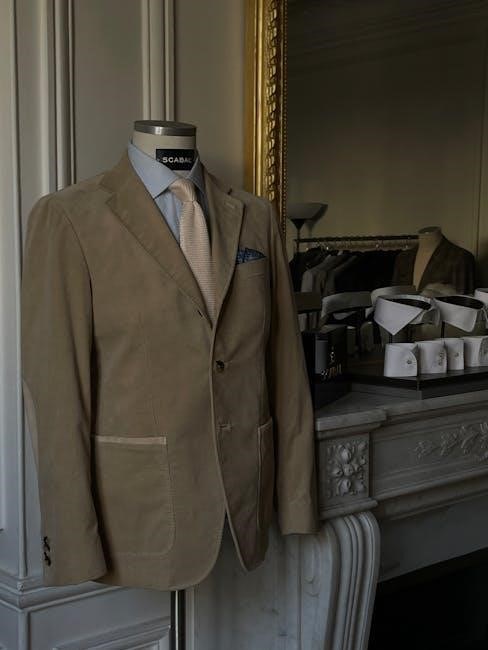
Waist and Seat Fit Problems
Issues with the waist and seat often impact comfort and silhouette. A suit feeling too tight around the waist restricts breathing and movement, creating an uncomfortable and visually unflattering appearance. Conversely, excessive looseness results in a baggy, shapeless fit.
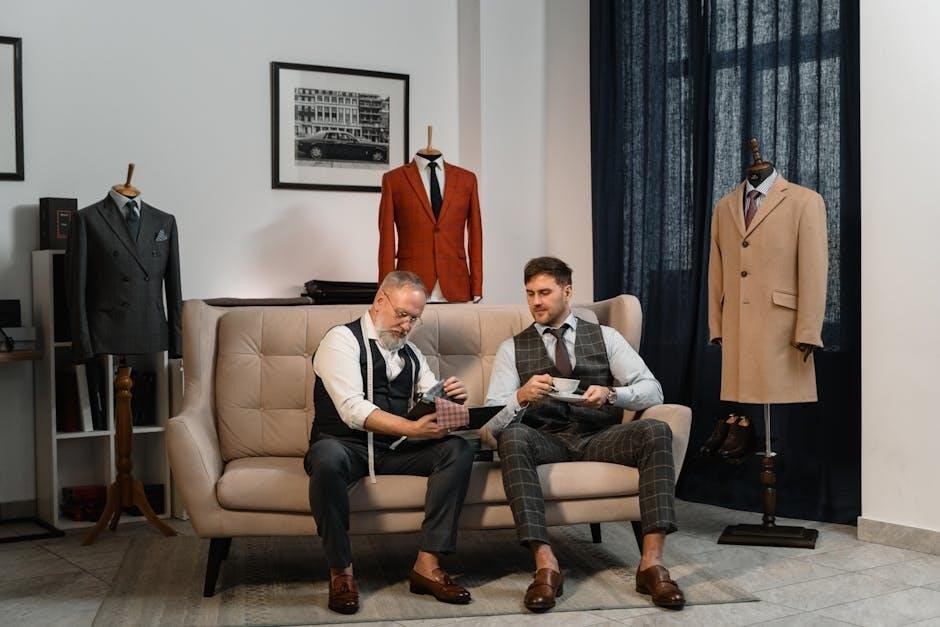
The seat of the trousers should comfortably accommodate your build without pulling or feeling overly tight. A properly fitted suit allows for a natural range of motion. Tailoring the waist is a common alteration, easily adjusted for a more refined fit. Seat adjustments are more complex, but essential for optimal comfort and a polished presentation.
Online Suit Size Calculators: Are They Reliable?
While convenient, online suit size calculators shouldn’t be your sole source for determining fit. They offer a starting point, utilizing algorithms based on inputted measurements, but often lack the nuance of a professional fitting. Brand-specific sizing variations significantly impact accuracy; a calculator may not account for these differences.
These tools can be helpful for initial estimations, especially when purchasing online, but always cross-reference with detailed size charts provided by the retailer. Prioritize accurate self-measurement or, ideally, a professional measurement. Consider calculators as a guide, not a definitive answer, and be prepared for potential alterations to achieve a truly perfect fit.
Brand-Specific Sizing Variations
Suit sizing isn’t standardized; significant variations exist between brands. A 40R in one brand might fit like a 42R in another, due to differing cuts, fabric weights, and design philosophies. Italian brands often run slimmer, while American brands tend to be more generously cut.
Always consult each brand’s specific size chart before purchasing. Don’t assume your size remains consistent across all manufacturers. Reading reviews can offer insights into how a particular brand typically fits. Prioritize trying on suits whenever possible, or carefully review return policies if ordering online, acknowledging these inherent sizing discrepancies;
Suit Alterations: Achieving the Perfect Fit
Even with careful measurement, alterations are often crucial for a truly impeccable fit. Common adjustments include sleeve length, waist suppression, and pant hem adjustments. Shortening or lengthening sleeves ensures proper cuff exposure. Taking in the waist creates a more tailored silhouette. Hemming pants to the correct break—none, slight, or full—completes the look.
Finding a skilled tailor is paramount. They can address fit issues beyond simple adjustments, like reshaping the shoulders or adjusting the jacket’s overall structure. Budget for alterations when purchasing a suit; they represent an investment in long-term wearability and appearance.
Common Alterations (Sleeves, Waist, Hem)
Sleeve alterations typically involve shortening the length, revealing approximately half an inch of shirt cuff. Waist suppression, or taking in the sides, refines the jacket’s silhouette for a more fitted appearance. Pant hems are adjusted to achieve the desired break – the amount the fabric creases over the shoe.
A ‘no break’ hem offers a modern, clean line, while a ‘full break’ is more traditional. Altering the seat of the pants can also improve comfort and fit. These adjustments, performed by a skilled tailor, transform an off-the-rack suit into a personalized garment.
Resources for Further Information & Size Charts
ASOS provides a detailed men’s suits & tailoring size chart, assisting in finding the optimal fit based on individual measurements. Numerous online menswear guides offer comprehensive advice on suit styles and sizing, ensuring a well-informed purchase.
Retailers often feature their own specific size charts; consulting these is crucial due to brand-specific variations. Measurement guides, utilizing measuring tape instructions, are readily available online. Exploring these resources empowers customers to confidently navigate the complexities of suit sizing, leading to a more satisfying shopping experience and a perfectly fitted suit.